The calas of the south-east
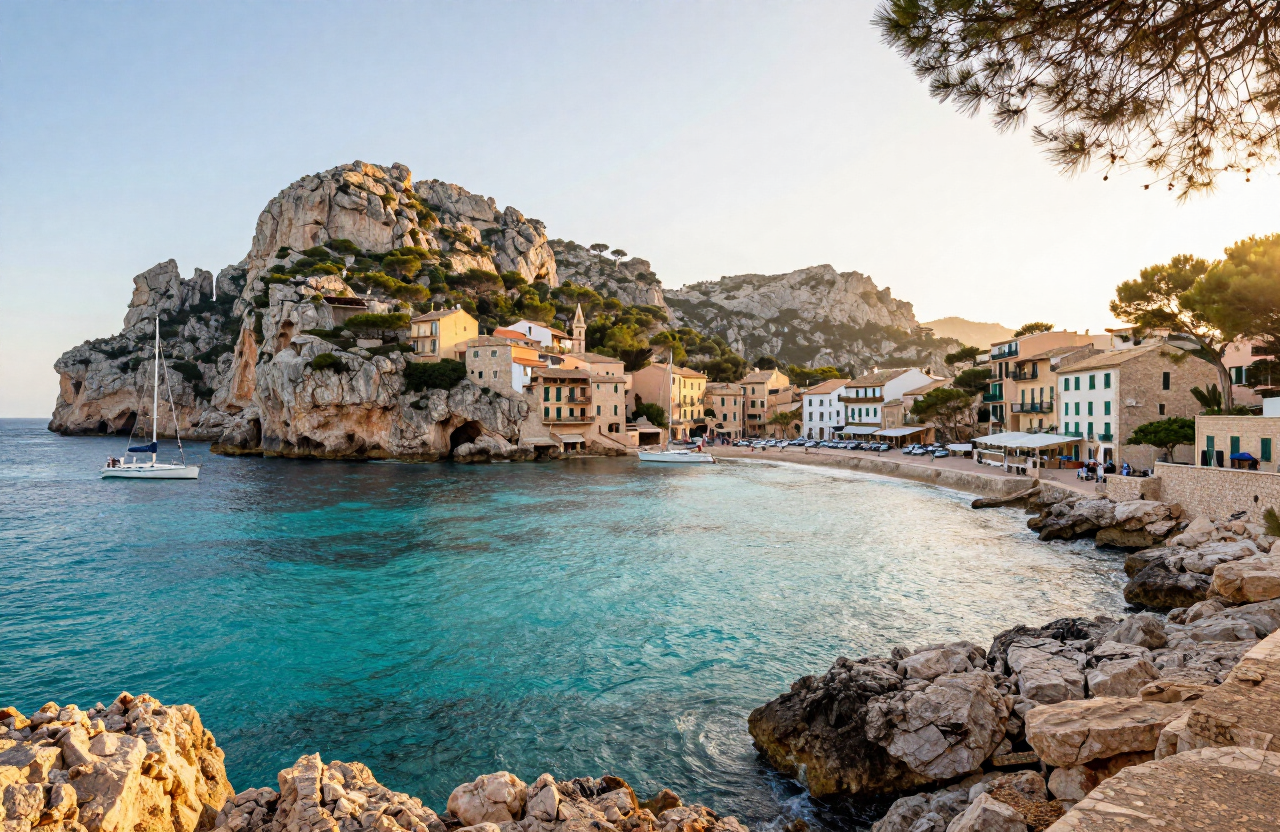
Cala Llombards, Cala Mondragó and Cala s’Almunia are small, sheltered and impossibly turquoise. Arrive before ten in summer; in September you may have them nearly to yourselves.
Hidden coves and stone villages above the sea
Best time
May – June & September – October
Gentle pace
5–7 slow days
Ideal for
Families · Beach lovers · Slow road trippers
Mallorca is the largest of the Balearic Islands, and the one that most rewards the unhurried. Beyond the busy resorts of the south, the island reveals its quieter self: a mountainous west coast of olive terraces and stone villages, a north of pine-fringed coves lapped by water so clear it looks lit from below, and a flat central plain dotted with old fincas and market towns that still close for siesta.
With children, base yourselves in one of the stone villages of the Tramuntana — Sóller, Fornalutx or Deià — and let the days find their shape: a morning swim in a cala, a long lunch on a shaded terrace, an evening walk to the village bakery as the swallows wheel above the church tower.
Cala Llombards, Cala Mondragó and Cala s’Almunia are small, sheltered and impossibly turquoise. Arrive before ten in summer; in September you may have them nearly to yourselves.
Ride the 1913 wooden tram from Palma through the orange groves to Sóller, then the old train on to the port. Children consider it the best part of the whole island.
Repeatedly called Spain’s prettiest village — stone houses, lemon trees and a single café under the plane trees. Drive the mountain road slowly and stop often.
Hidden gem
Tucked down a steep, unmarked path near Cala s’Almunia on the south-east coast lies Caló des Moro — a tiny crescent of white sand between cliffs, the water so clear and turquoise it looks painted. There are no facilities and no signposts; arrive before nine in summer, carry everything in, and you will swim in what may be the most beautiful cove in the Mediterranean, with only those who know the path for company.